Credit: Zeynep Demir Aslim / Shutterstock.com
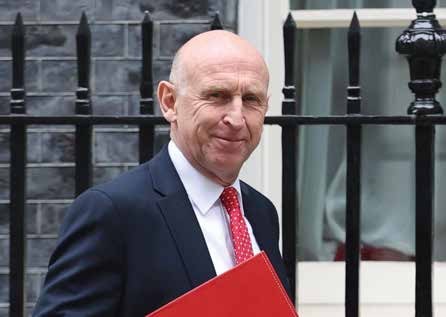
Chancellor John Healey has announced a further £1.5 billion for social and affordable housing, a freeze on major changes to building regulations and new measures to support first-time buyers, as the Government seeks to boost housebuilding and ease pressures on the construction sector.
Delivering his first Budget to Parliament on 28 October, the Chancellor set out a package of measures he said were designed to stimulate investment, reduce business costs and increase housing delivery, against a backdrop of rising energy prices, global economic uncertainty and continued pressure on public finances.
Housing formed a central part of the announcement, with the Government committing additional funding for affordable homes, changes to brownfield development requirements and new financial support for councils and firsttime buyers.
The Chancellor confirmed an additional £1.5 billion for the Social and Affordable Housing Programme, taking the Government’s total commitment to council housing to £40 billion.
The announcement was accompanied by measures intended to make it easier and cheaper for local authorities and housing providers to deliver new homes.These include extending access to cheaper borrowing for councils and making land sold to social housing providers VAT-free.
The Government also said it will remove biodiversity requirements for more brownfield sites, with the aim of reducing barriers to development and encouraging housebuilding on previously developed land.
In a potentially significant announcement for the construction industry, Healey pledged that there would be no major changes to building regulations during the current Parliament, except where changes are critical for safety. The commitment is intended to provide greater regulatory stability for the sector, following a period of repeated changes to building requirements.
The Budget also introduced new measures aimed at helping more people onto the housing ladder. A new First-Time Buyer ISA will replace the existing Lifetime ISA, while changes to the current scheme’s withdrawal penalty will take effect immediately.
Under the revised arrangements, savers purchasing a property above the Lifetime ISA price limit will be able to recover at least the amount they originally contributed.
From next spring, the Government will introduce a new equity loan scheme, Your First Home, supported by £4.7 billion of government-backed lending. The Chancellor said the scheme would target first-time buyers who do not have access to financial assistance from their families.
Rising operating costs were another focus of the Budget, with measures announced to reduce energy costs for British businesses. The new British Industrial Competitiveness Scheme will provide a 25% reduction in electricity bills for 10,000 firms identified as being at the heart of British industry. The scheme will begin in April, with the Chancellor confirming that backdated payments will also be made for energy costs incurred this year.
The Budget also outlined measures intended to support regional development, regeneration and infrastructure investment. Mayoral authorities will receive access to a further £1.5 billion in devolved loans to support local economic projects, including transport improvements and urban regeneration.
Ed Thomas, Director of Government and External Affairs at Worcester Bosch, said: “The Chancellor’s announcement of direct support on energy bills will help many households. Paired with his extension of the VAT zero-rating, these interventions will help restrain the expected rise in energy costs over the next few months, although they will not eliminate it.
“It might not get as many headlines, but the Chancellor’s stated ambition to get energy costs in line with Europe is far more significant- and welcome- in the long run. His promise of a new Cost Control framework to drive down prices is extremely positive and his announcement that “green levies” will be removed from bills and funded directly from Government is a good start to this process.
“Long-term Government action to reduce energy costs will help households, support the energy transition and boost economic growth. If he can deliver this, the Chancellor will have made an impressive achievement.”
Responding to the Budget announcement that residential developments on brownfield sites of up to 1.5 hectares will be exempt from Biodiversity Net Gain (BNG) requirements, Simon Rix, planning expert at Planix and guest speaker at the Homebuilding & Renovating Show, said: “The proposed exemption for smaller brownfield housing developments could be a welcome change for small developers and self-builders.... [removing] a significant layer of cost, complexity and uncertainty from small-scale housebuilding.”