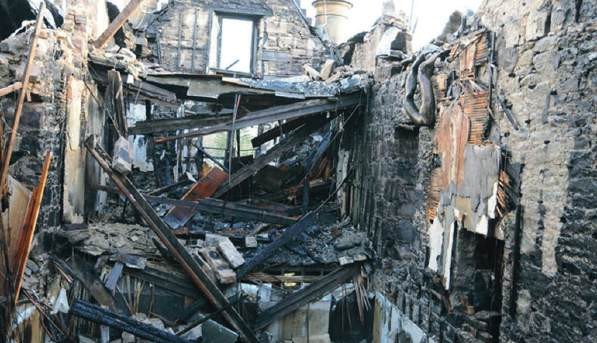
The Cameron House Hotel fire.
Images © Crown Office and Procurator Fiscal Service
Recent high-profile hotel fires have brought renewed attention to fire safety standards across the hospitality sector. A major incident in a hotel in Turkey earlier this year resulted in the deaths of 78 people and prompted global concern.
Meanwhile, in the UK, the 2017 fire at the Cameron House Hotel near Loch Lomond, which claimed two lives, highlighted the particular vulnerabilities of historic and converted hotel buildings. The tragedy led the Scottish Government to launch a consultation on whether hotels should be required to have sprinklers installed, a move that could signal a significant shift in fire safety policy for the sector.
63 fire engines and 125 firefighters were needed to douse the fire at London’s Chiltern Firehouse.
Sadly, hotel fires remain in the news. In February, London’s Chiltern Firehouse was the scene of a major incident when a blaze spread from the restaurant’s pizza oven through internal vents to the roof. The fire was reported globally and caused extensive damage to the building, leading to the evacuation of 100 guests and staff . Thankfully there were no injuries, but it took more than five hours to bring under control and required the attendance of 63 fire engines and 125 firefighters from across London. The hotel will be closed for the foreseeable future and the incident has again raised questions about fire safety in hotels, particularly those housed in historic buildings.
CAMERON HOUSE FIRE
The tragic fire at Cameron House generated significant focus on hotel fire safety in Scotland, raising serious concerns about the level of protection provided to guests, especially in historic properties.
Following the fire, the Fatal Accident Inquiry (FAI) recommended the Scottish Government consider mandatory fire suppression systems, such as sprinklers, in future hotel conversions.
This gained further weight following the tragic fire at the New County Hotel in Perth, which claimed three lives in 2023. That investigation is still ongoing but, in both incidents, sprinklers could have helped play a critical role in containing the fire and minimising damage, allowing more time for guests and staff to evacuate safely.
The Scottish Government has now launched a consultation on whether hotels should be required to have sprinkler systems installed.
COST/BENEFIT ANALYSIS
As part of its ongoing review, the Scottish Government commissioned a cost-benefit analysis to assess the viability of mandating sprinkler systems in hotels, particularly in the context of converting traditional or historic buildings.
The analysis considers both the immediate cost of installation versus long-term benefits, including reduced risk to life, minimised damage, and continuity. Many will be surprised to see the value of a life expressed in monetary terms. But this is how such decisions are supported by government, and why they must be carefully scrutinised to ensure impacts aren’t underestimated, and costs aren’t overstated.
A CLEAR ROLE FOR SPRINKLERS
Despite recent regulatory changes for buildings where people sleep, many are surprised sprinklers are not the norm in hotels. This crucial safety information is rarely included in the typical hotel search engine.
Fire strategies for hotels are challenging due to the numbers of guests staying overnight, many of whom are often unaware of fire risks. While hotels must comply with fire safety regulations, sprinklers are not always mandated, especially in lower-rise buildings.
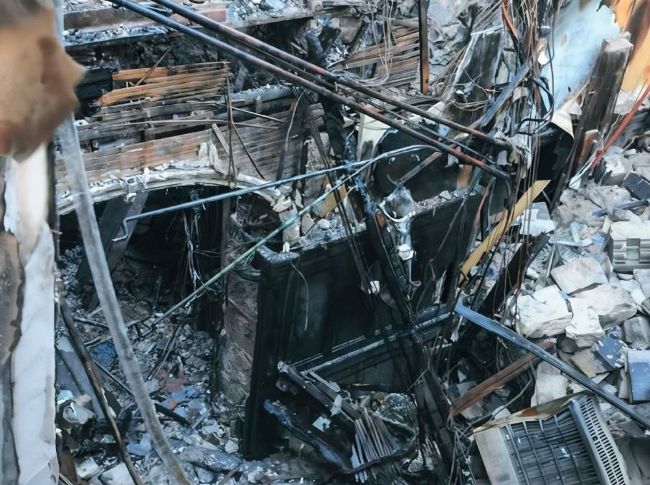
The Cameron House Hotel fire.
Images © Crown Office and Procurator Fiscal Service
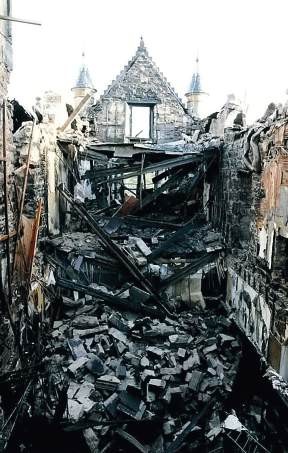
The Cameron House Hotel fire.
Images © Crown Office and Procurator Fiscal Service
As the recent fires have demonstrated, this can be a dangerous oversight. Remote locations can exacerbate the problem even further, with the fire services not always readily available. The Turkish hotel fire, for example, occurred 40 minutes from the nearest fire service and had questionable safety features. Had sprinklers been installed, as required locally, the outcome could have been very different.
Sprinklers can keep a fire contained, giving more time for fire services to respond and helping to minimise the overall damage. When you consider all the elements that can contribute to a fire in a hotel, from cooking equipment and electrical systems to laundry services, sprinklers are a proven, underused tool offering the best all round protection.
With the Scottish Government now taking steps to assess the necessity of sprinklers in hotels, industry professionals must advocate for a future where fire suppression systems are the standard in protecting hotel guests.
After all, our comfort and safety during a hotel stay should never be taken for granted. Given the strong evidence supporting their effectiveness in containing fires and protecting lives, sprinklers should no longer be viewed as optional.
www.business-sprinkler-alliance.org
\\ BUSINESS SPRINKLER ALLIANCE
The Business Sprinkler Alliance (BSA) was established in 2010 and is an alliance of fire safety professionals working to protect UK plc against fire. The BSA aims to highlight the true cost of fire and increase the number of business premises that have automatic fire sprinklers fitted. The BSA is driving a culture change so that sprinklers are understood and accepted as the norm for UK business buildings.
The BSA’s founding members are the Chief Fire Officer’s Association, the European and National Fire Sprinkler Networks, the British Automatic Fire Sprinkler Association, commercial insurer FM Global, and the Fire Protection Association.