Aspontaneous explosion of heat soak tested toughened glass, while statistically rare, still represents a risk, one that designers should be aware of at specification stage. As the voice of the UK’s rooflight industry, it’s our duty to minimise this risk through education and promoting good practice. This is why we are recommending that laminated glass should be specified as the first choice inner pane for rooflights, unless a stringent risk assessment shows that a toughened inner pane does not introduce additional risk.
When selecting or specifying overhead glazing for inclusion within rooflights, there are two parties to bear in mind – those above the glass (often maintenance staff), and those below (building users). Our first choice for safety recommendation protects those below the rooflight. Laminated panes are produced by bonding a film, or interlayer, between two or more plies of glass (typically annealed or heat strengthened glass but can also be toughened). Upon fracture, the interlayer holds the broken shards of glass, preventing injury to those immediately below the rooflight.
Our recommendation follows examples of rooflights with a double glazed unit using a toughened inner pane shattering spontaneously. This can happen when small inclusions (invisible flaws) cause the pane to shatter, usually into small dice, but it may also fall in clumps which may cause injury or damage to people, pets and property below. A laminated inner pane, meanwhile, minimises the risk of any glass falling into the room by retaining any glass fragments and hereby reducing risk of injury, damage to property and subsequent liability.
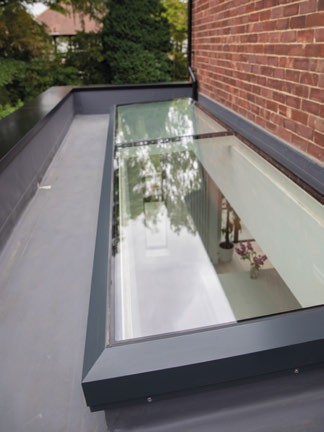
Source:
Brett Martin Daylight Systems.
WHAT TO SPECIFY
The Rooflight Association’s technical guidance: Document NTD14 Glass Rooflights – Specification Guide, which is free to download via our website, provides clear information on what specifiers must consider when selecting a rooflight, e.g., why prioritise laminated inner panes for rooflights; assess the risk before accepting a toughened inner pane as an alternative; be aware of thermal stress risks; and understand that non-fragility is a separate consideration.
Architects and specifiers can support their design decisions by referencing CIRIA (Construction Industry Research and Information Association) C632 Guidance on Glazing at Height, which provides a structured methodology for assessing and documenting glazing risk.
BEST PRACTICE
While British Standards permit toughened inner panes in certain situations and locations, subject to a satisfactory risk assessment, this represents minimum compliance rather than best practice. Architects and specifiers should be mindful that compliance with standards does not remove the obligation to address foreseeable risks.
We are in favour of British Standards being updated to remove the option for monolithic toughened glass to be used for the inner pane of any overhead glazing, irrespective of height or location (except for over restricted spaces that are only accessed for maintenance and where additional safety precautions are in place to mitigate the risk). To drive positive change, we are lobbying government regarding overhead glazing safety and safety for building users, and we are in communication with the Building Safety Regulator.
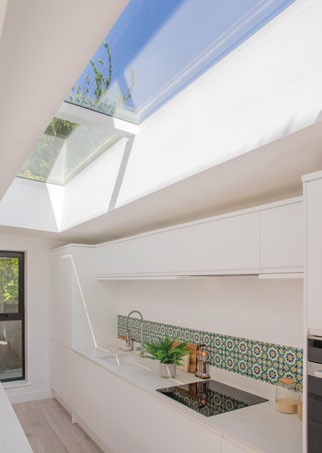
Source:
Brett Martin Daylight Systems.
Until the option for toughened inner panes in overhead glazing is removed from British Standards and/or prohibited via Approved Document K, Rooflight Association members that offer glass rooflights without a laminated inner pane will always make the associated risks and responsibilities clear in their literature and quotations, and will request that customers acknowledge those risks and responsibilities before specifying and supplying such products.
LOOK FOR THE LOGO
Specifiers are encouraged to look for the Rooflight Association campaign logo when specifying glazed rooflight products, as it indicates alignment with this safety-led guidance. Specifying a laminated inner pane as standard provides a clear, defensible position that prioritises occupant safety, reduces risk and aligns with best practice in overhead glazing – ahead of regulatory change.
Until a laminated inner pane is made a requirement in Building Regulations guidance – ideally, within Approved Document K – we are encouraging stakeholders to study the guidance, understand the risk and share this information with decision makers. Only then can they make an informed choice.
www.rooflightassociation.org