Heritage buildings are some of the UK’s most sought-after real estate, particularly in city centres where their historic prestige is matched by commercial demand. From embassies and financial institutions to hospitality and luxury retail, these buildings are increasingly being adapted for contemporary use.
For specifiers, contractors and project teams, refurbishing and renovating these buildings and ensuring they meet current building regulations brings a distinct set of challenges – particularly when it comes to fire safety.
Incomplete records, historic construction methods, conservation restrictions and evolving regulation all combine to increase technical and commercial risks. Managing that risk effectively depends on decisions being made early and long before work actually begins on site.
UNDERSTANDING THE TASK AT HAND
Every heritage project should begin with an in-depth investigation. These buildings have evolved over centuries, with alterations and adaptations carried out under many different sets of regulations. Original drawings may be missing, undocumented works may be concealed and access for surveys can be limited in buildings that are occupied.
This all means that project teams are often working with fragmented information, increasing the likelihood of late design changes or unforeseen site issues.
Fire safety risks including hidden voids, undocumented service routes or compromised compartmentation can remain undiscovered until construction is underway, putting pressure on programmes, cost and delivering compliance. Reducing this uncertainty requires a structured approach from the outset, supported by early collaboration right across the project team.
EVERY STAKEHOLDER COUNTS
A key step, and one that can sometimes be overlooked, when derisking heritage projects is bringing together all relevant stakeholders as early as possible. The opportunity to share information and plan properly should involve the client, architects, contractors, fire prevention experts, conservation specialists and key members of the supply chain all working together.
While this early engagement requires upfront investment, the cost is typically far lower than the disruption caused by late-stage redesigns, stalled programmes or unplanned remediation works.
Establishing a co-ordinated technical strategy before construction allows for risks to be identified, assessed and mitigated in a controlled, planned way. One of the most affective frameworks to adopt an ADD approach, which means:

The Embassy of Brazil, London.
• Assess: The focus at this stage is on fact-finding and validation. This includes reviewing all available records, carrying out intrusive and non-intrusive surveys where possible, validating existing fire protection measures and identifying cumulative refurbishment risks. Understanding what is already in place and where there are gaps is vital to creating a robust and compliant fire strategy.
• Develop: The priority here is creating a fully coordinated technical design that meets current building regulations, while remaining mindful of conversation requirements. For specifiers, this means opting for materials and systems that are both compatible with the historic building and deliver long-term performance. Engaging with specialist suppliers at this stage helps inform realistic design solutions which remain mindful of cost.
• Deliver: With a co-ordinated design in place, the project can progress with a greater degree of confidence supporting better procurement decisions and encouraging sensible risk allocation. Works need to be carefully sequenced, particularly where specialist restoration or fire protection installations are required.
ESTABLISHING THE GOLDEN THREAD
The early stages of a heritage project present a vital opportunity to establish the Golden Thread – the digital record of building information that exists throughout the project lifecycle and can help inform future works post occupancy.
For many heritage buildings, this is the first time a reliable, centralised record of fire-critical information has existed. Mapping hidden voids, legacy materials, compartment lines and past interventions creates clarity for current teams and provides a safer foundation for future maintenance or refurbishment. For specifiers and contractors, a well-defined Golden Thread supports traceability, accountability and compliance, reducing ambiguity long after the project is completed.
THE VALUE OF ENGAGING SPECIALISTS
Bringing in specialist expertise is essential at every stage of a heritage project, as they are inherently more intricate and complex than standard developments. Fire safety, conservation and construction specialists bring decades of experience to the table that allow project teams to anticipate issues before they arise, helping to manage timelines and costs. No single stakeholder can have all the answers, and success hinges on shared responsibility rather than siloed decision-making or margin-driven choices.
By defining the Golden Thread from day one, valuing specialist input and prioritising collaboration, the industry can deliver heritage refurbishments that are compliant, safe and commercially robust, while preserving the character that makes these buildings so appealing in the first place.
www.ais-interiors.com
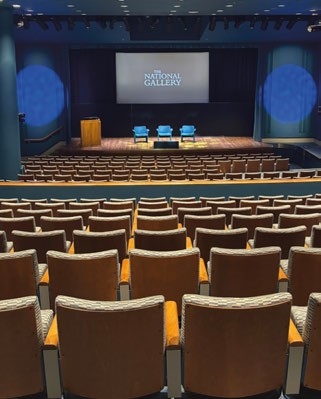
The National Gallery, London